What a slider is (and isn't)
A slider is a breaking pitch thrown harder than a curveball and with less depth. At the big-league level it typically sits 6–10 mph off the fastball with tight, late lateral movement — a two-plane wipe from a right-hander to a right-handed hitter, or a "sweeper" version that moves more horizontally.
It is not a curveball with a smaller break, and it is not a "cutter with more movement." A true slider is thrown with a distinct release — the ball rolls off the side of the middle finger, not the tip — and that release is what creates the late, sharp bite hitters can't square up.
The grip
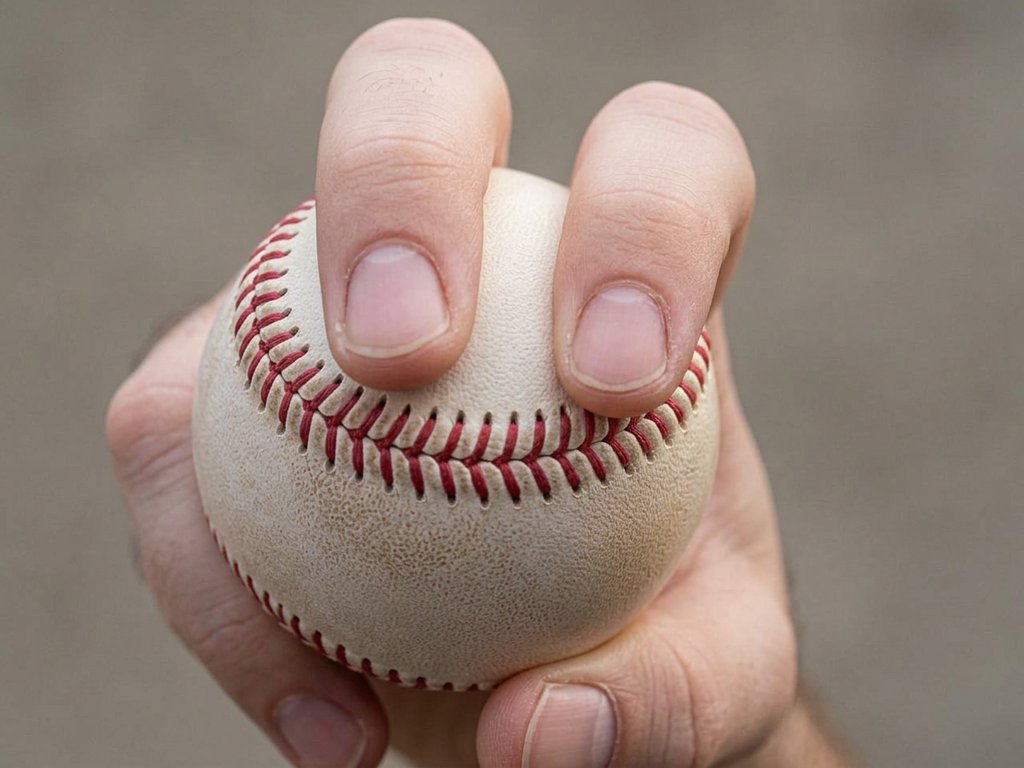
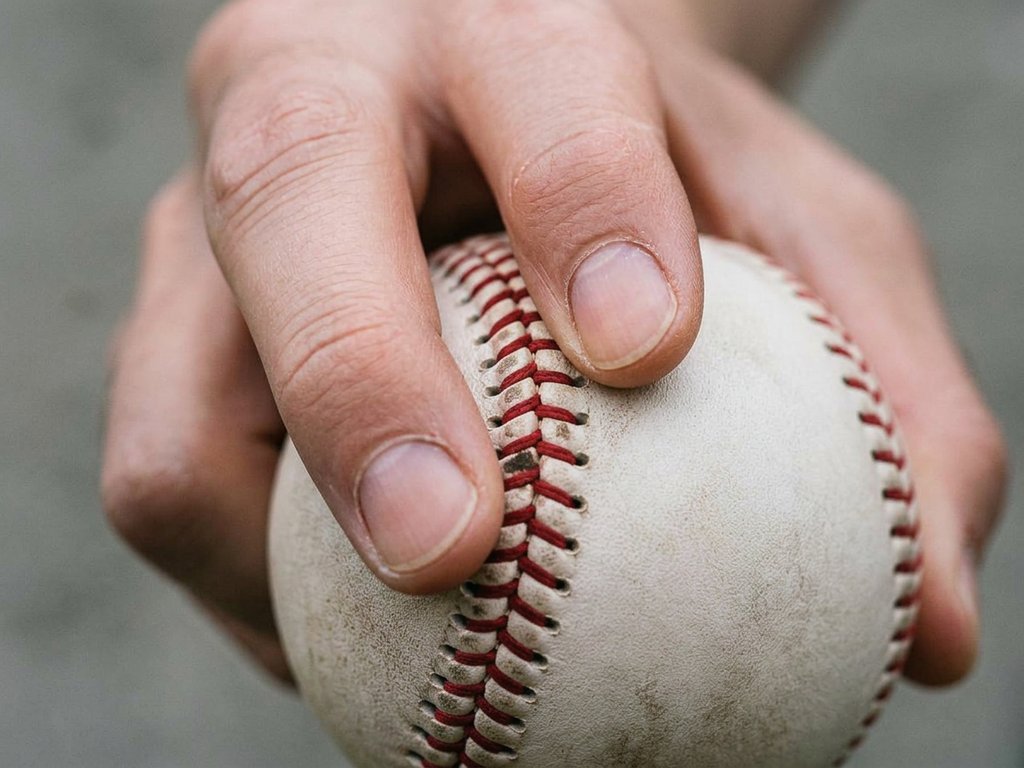
Start with a four-seam fastball grip, then slide both fingers slightly to the outside third of the ball, so the middle finger runs along the outer edge of the closer horseshoe seam. The index finger sits loosely next to it and does almost nothing at release.
- Middle finger is the driver. Pressure lives on the outside of the pad, along the seam.
- Index finger is a passenger. If you feel pressure there at release, the pitch will cut, not slide.
- Thumb stays on the opposite side of the ball, tucked (not flat), for a stable base.
- Space in the palm. A little air between the ball and your palm — a slider is a fingertip pitch, not a palm pitch.
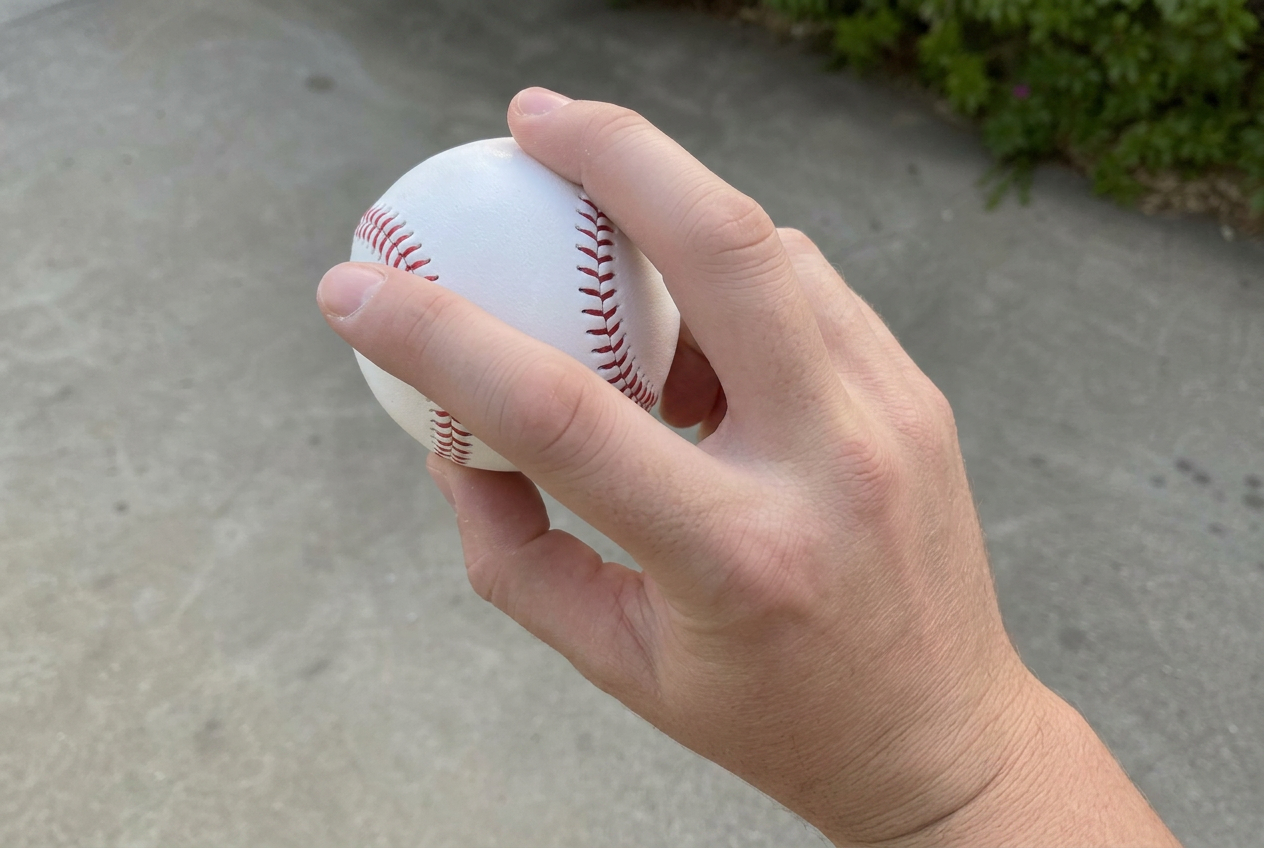
For a sweeper (a slider with more horizontal action), widen the two fingers a touch and cock the wrist a few degrees toward the thumb. Everything else stays the same.
Arm action and release
The single biggest cue: throw it like a fastball. Same arm speed, same slot, same intent. The grip and the release do the work — your arm should not.
At release:
- Stay behind the baseball as long as possible, then let the ball come off the outside half of the middle finger.
- Think "middle finger to the target." The fingertip is the last thing that touches the ball.
- The wrist does not snap down like a curveball. It stays relatively firm; the spin comes from the finger dragging across the seam.
- Finish long and through — do not shorten the arm to try to "make it break."
“Middle finger to the target. The ball comes off the side, not the tip.”
A simple cue: "Karate chop through the ball"
For most pitchers, imagining a karate-chop motion — hand and forearm slicing straight past the target, thumb turning down at the very end — produces the correct release without over-coaching it. Some pitchers prefer "throw a football" or "yank the door handle." Pick the cue that gives you the release; ignore the other two.
Where to throw it
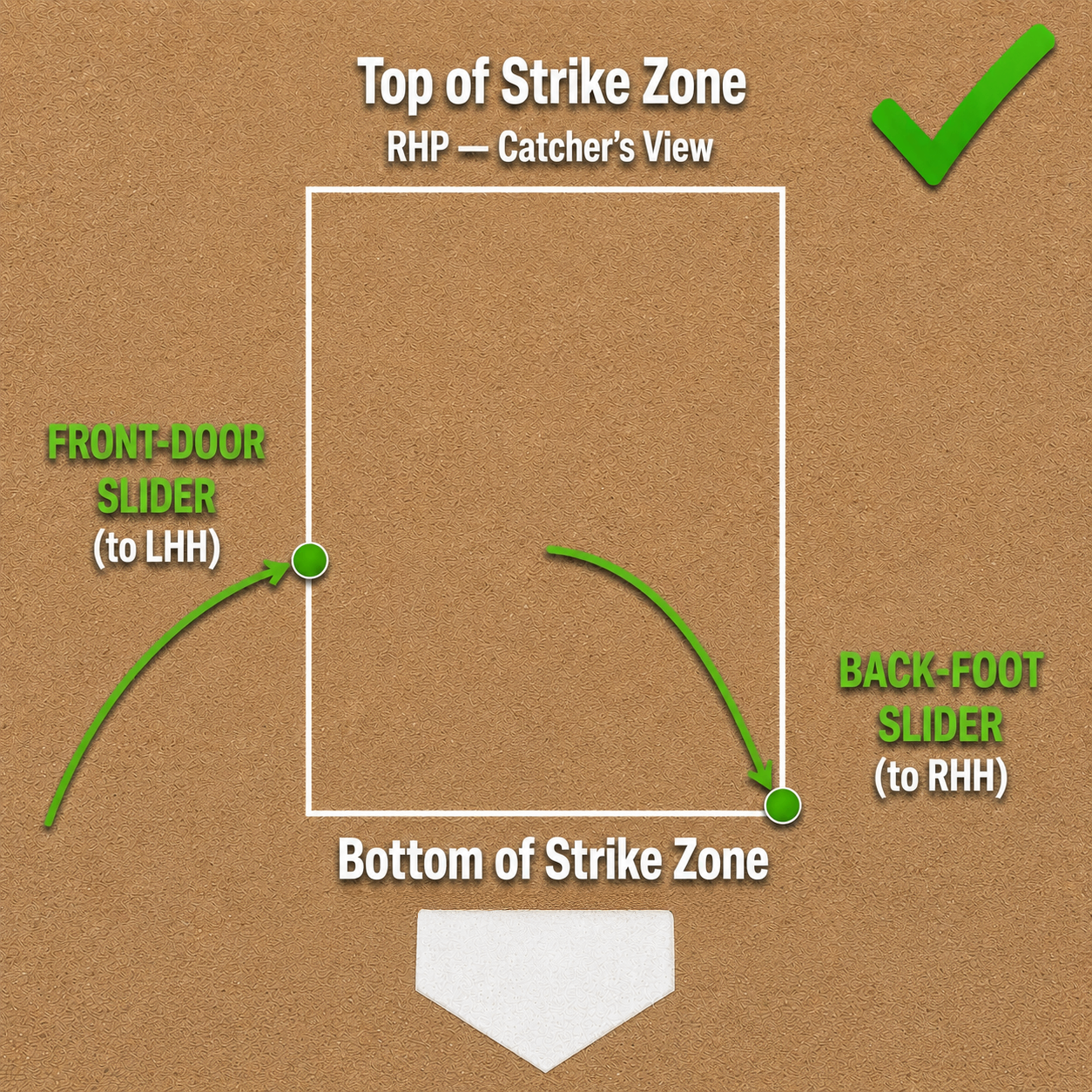
The slider lives on the horizontal edges of the plate and just off them. To a same-handed hitter, the classic location is the back foot — starting middle and finishing at the hitter's back hip. To an opposite-handed hitter, the front-door slider that starts off the plate and clips the inside corner is one of the most uncomfortable pitches in the game.
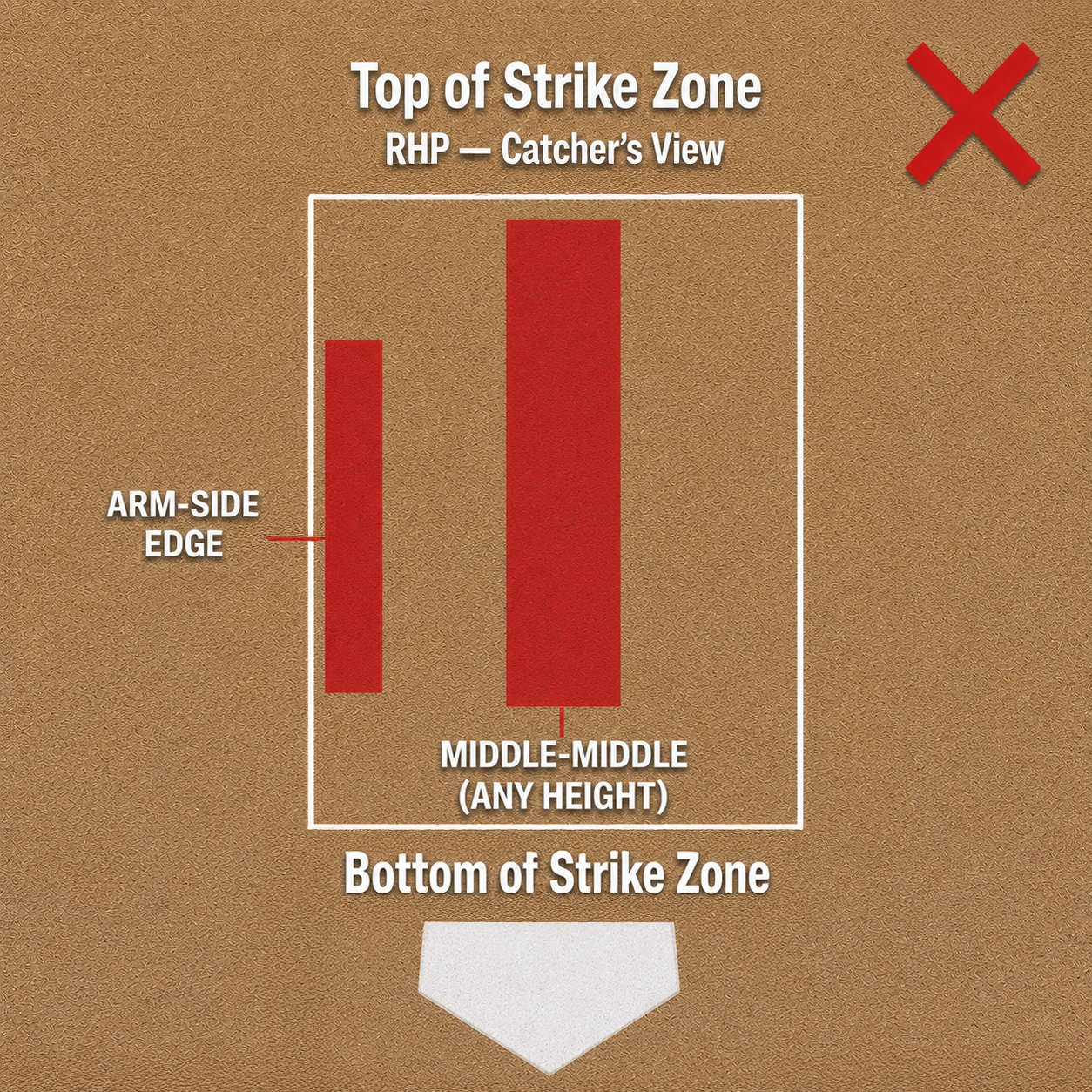
Two locations to avoid until you have real command: middle-middle at any height, and the arm-side edge (a slider that leaks arm-side is a fat fastball with less velocity).
Common mistakes
- Trying to spin it. Pitchers who over-rotate the wrist create a slurve — big, slow, and easy to see. Keep the wrist quiet; let the fingers do it.
- Slowing the arm. Hitters read arm speed before anything else. A slower arm = a tipped pitch.
- Cutting it, not sliding it. If both fingers stay engaged, you'll throw a cutter. Get your index finger passive.
- Throwing it for a strike every time. The slider is your best chase pitch. Use it that way.
- Overuse. Sliders carry a higher elbow load than fastballs. For high-school pitchers, keep the mix under ~25% of total pitches and never throw one when the arm is fatigued.
Building it in a bullpen
- Play catch with the grip from 30 feet. No windup, no intent — just feel the ball rolling off the outside of the middle finger. Look for tight, tilted spin.
- Move to 60 feet and throw at 60–70% intent. You're still chasing shape, not location.
- On the mound, throw sets of five from the stretch. Aim: two back-foot to a same-handed hitter, two front-door to an opposite-handed hitter, one strike-to-ball at the top of the zone.
- Record from behind. If the spin axis wobbles or the ball tumbles, it's a grip problem — not an intent problem.
A note on age and workload
Breaking pitches are not the enemy — poorly built ones and over-thrown ones are. As a general rule, we don't teach the slider to pitchers who haven't yet built a repeatable four-seam and change-up, and we never program a heavy slider week for a growing arm. Command the fastball first, add a change, then layer the slider on top.
Learn from the source
Everything above is the short version. Clemens Clubhouse is building the long version — full video breakdowns of grips, mechanics, and mound craft from the family that has spent five decades pitching at the highest level of the game.
JOIN THE ON-DECK CIRCLE