Stance: balance beats style

A good stance is athletic, balanced, and quiet. Feet slightly wider than shoulder-width, weight on the balls of the feet, knees soft, hands somewhere near the back shoulder. Every big-league hitter looks a little different at setup — what they share is balance and the ability to move without falling.
If a hitter can't stand in their stance and be shoved lightly from any direction without tipping, the stance is wrong. Fix the base before you touch anything else.
The load: store energy, don't create it

The load is a small backward move of the hands and hips that gathers energy before the swing. Think of it as pulling back a bowstring — slow, controlled, and finished before the pitcher releases the ball. A late load is the single most common flaw in young hitters, and it looks like a "long swing" even when the swing itself is short.
- Hands move back an inch or two, not out and around.
- Back hip rotates slightly inward — hitting coaches call this "getting into your back side."
- Front foot can pick up (leg kick) or stay grounded (toe tap). Both work. Pick one and repeat it.
Stride and swing: short, direct, through
The stride is small — 4 to 8 inches for most hitters — and lands before the swing starts. Once the front foot is down, the swing begins from the ground up: back hip fires, hands stay inside the ball, and the barrel is delivered through the zone on a slight upward path (roughly matching the downward angle of the pitch).
Two cues that fix most swings:
- "Knob to the ball." Keeps the hands inside and the barrel behind them until the last moment.
- "Swing through, not to." The barrel finishes past contact — hitters who stop at the ball hit weak fly balls.
“See it deep, hit it out front. That's the whole game.”
Contact point
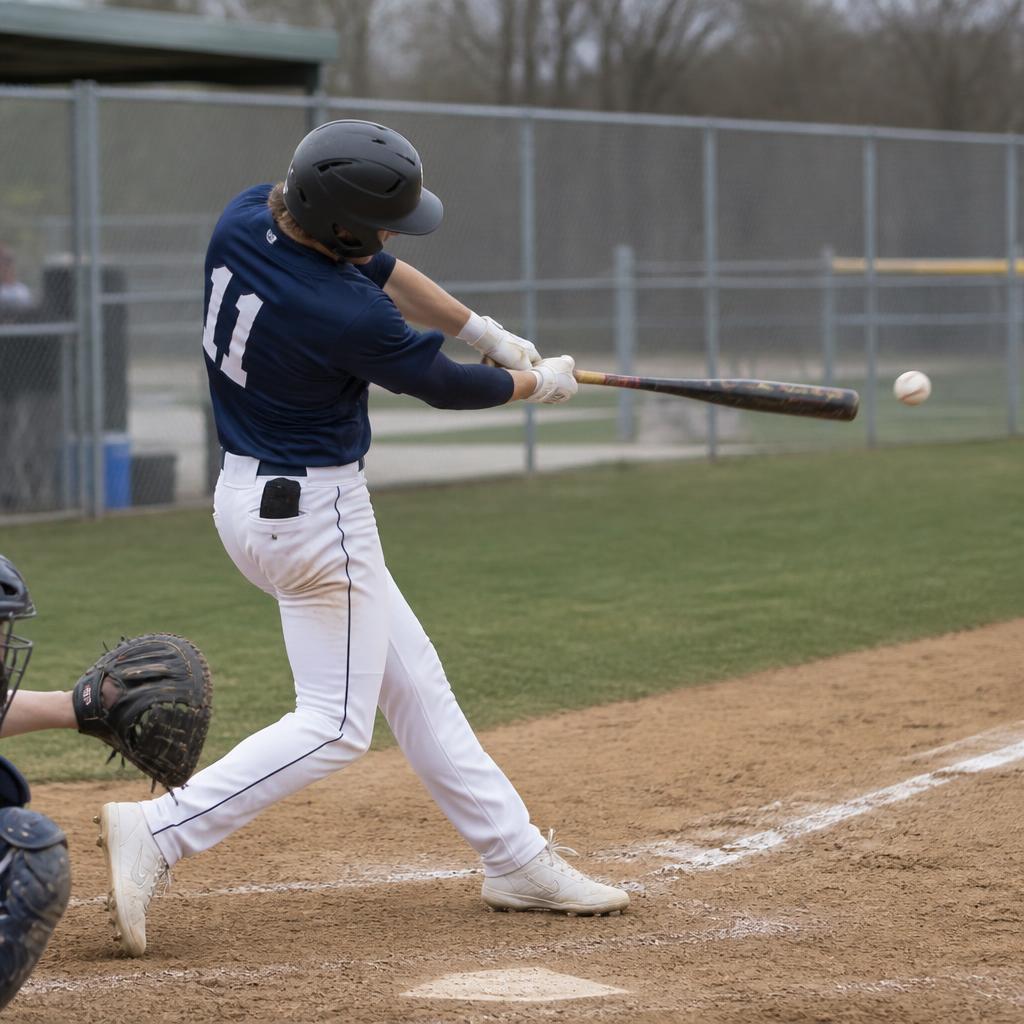
Great hitters hit the ball out in front of the plate on inside pitches, and let the ball travel deeper into the zone on outside pitches. The barrel gets there on time because the hands stayed short and the swing path stayed through the middle of the ball — not because the hitter guessed right.
Common mistakes
- Loading late. If the hands are still moving back when the ball is halfway to the plate, the swing will always be late. Load earlier.
- Lunging. Diving out over the plate pulls the head off the ball and kills power. Stay on your back side longer.
- Casting. Throwing the barrel out first ("casting") creates a long, loopy swing. Knob to the ball, barrel last.
- Pulling off. The front shoulder flies open, exposing the whole zone. Keep the front shoulder closed until the hands start.
- Swinging down. Old coaching. A slight upward path produces line drives; a downward chop produces ground balls to the pull side.
How to practice it
- Tee work. 90% of hitting improvement happens on a tee. Set the tee at three heights and three locations. Focus on contact point and finish.
- Front toss. Ball comes in on a real angle, but soft enough to work on timing and direction. Hit line drives back through the pitcher.
- Live BP is the reward, not the workout. Ten quality tee swings beat 40 sloppy BP swings.
- Film every session from the side and from behind. The hitter's feeling and what the swing actually looks like are almost never the same thing.
A note for parents
Young hitters get worse when they hear a new cue every at-bat. Pick one thing to work on for a full week and let everything else go. A player thinking about five swing thoughts will execute none of them.
Learn from the source
Clemens Clubhouse is building the long version — video breakdowns, mechanics, and mound-and-plate craft from the family that has spent five decades in professional baseball.
JOIN THE ON-DECK CIRCLE